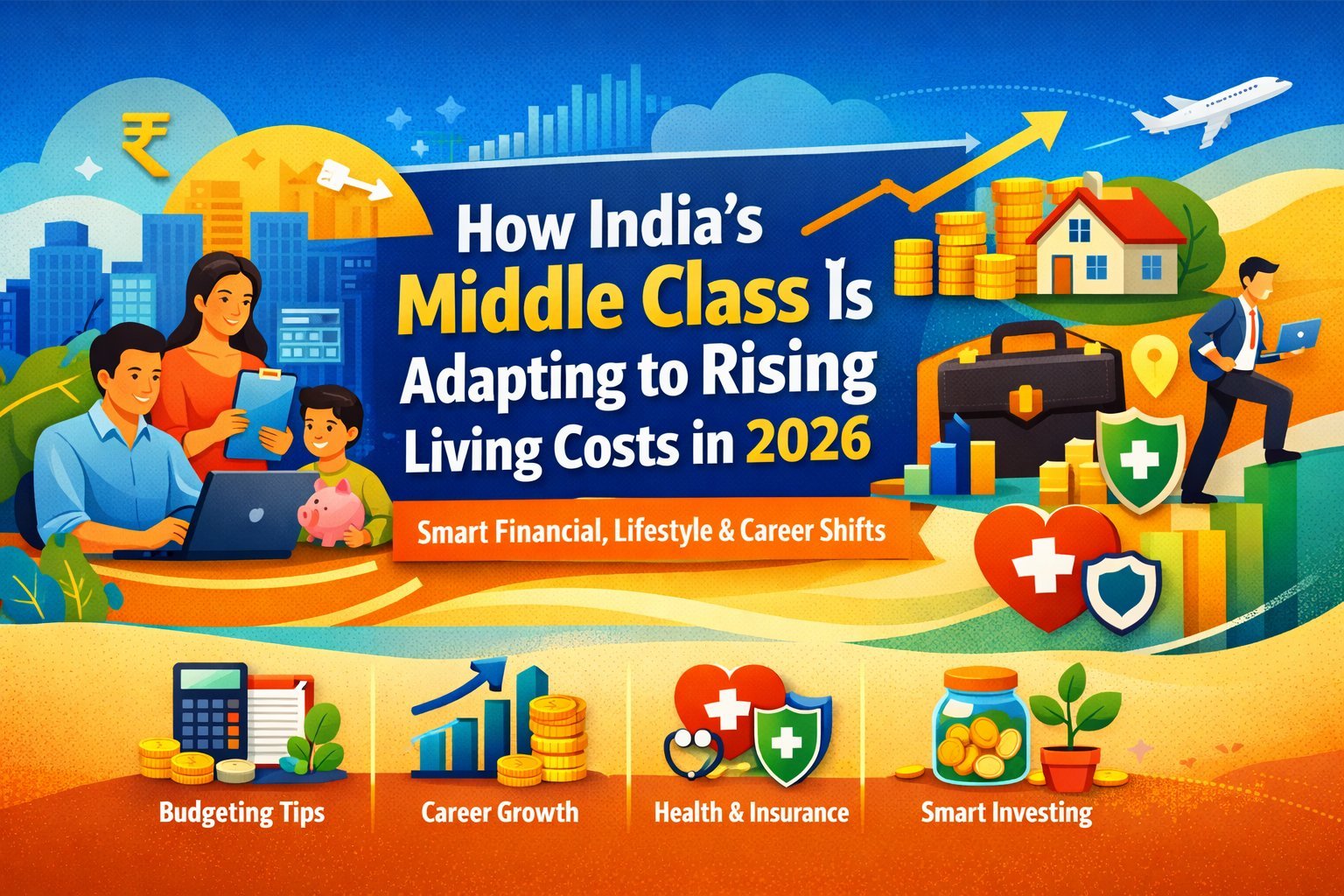
The Indian middle class has always been known for its resilience. From navigating economic slowdowns to adjusting during major policy changes, this section of society has consistently found ways to adapt and move forward. In 2026, however, the challenge feels different. Rising living costs are no longer a temporary phase or a short term adjustment. They have become a lasting reality that is reshaping how Indian families think about money, careers, lifestyles, and long term security. Across cities and towns, conversations at dining tables now revolve around monthly expenses, school fees, medical bills, rent increases, and future planning. The pressure is real, but so is the transformation taking place. Instead of giving in to financial stress, many middle class households are quietly reinventing their approach to life, spending, and earning.
Understanding Why Living Costs Feel Higher Than Ever
For many Indian families, the feeling that money does not stretch as far as it used to is not imagined. Everyday expenses such as groceries, electricity, fuel, healthcare, and education have steadily increased over the past few years. Housing costs have become especially heavy in urban areas, where rent and property prices continue to rise faster than income growth. Education expenses have also changed significantly. School fees, coaching classes, digital learning tools, and extracurricular activities now form a major portion of household budgets. Healthcare costs, even with insurance, demand careful planning due to rising hospital charges and medication prices. These pressures combined create a sense that financial breathing space is shrinking.
What makes 2026 particularly challenging is that income growth for many salaried professionals has not kept pace with these increases. Annual hikes often feel modest when compared to the jump in monthly expenses. This gap is what has pushed the middle class to rethink old habits and adopt smarter strategies.
Career Choices Are Becoming More Practical and Future Focused
Rising living costs have also changed how the middle class views careers. Job stability, once considered secondary to job satisfaction or prestige, has returned to the center of decision making. Professionals are actively seeking roles that offer steady growth, skill relevance, and long term security. Upskilling has become a household word. Many working professionals are investing time and money in learning new skills that align with evolving industry needs. Online courses, certifications, and part time learning programs are increasingly common, even among those who are already well established in their careers.
Parents are also guiding their children differently. Career discussions now focus less on traditional labels and more on adaptability and income potential. Fields that offer global opportunities, digital relevance, and flexible work options are gaining preference over rigid career paths with limited growth.
Health and Insurance Are No Longer Afterthoughts
Healthcare awareness has grown significantly among middle class families. Rising medical costs have made it clear that relying solely on savings during emergencies can be risky. As a result, health insurance is now seen as a necessity rather than an optional expense. Families are opting for comprehensive coverage, understanding policy details more carefully, and planning for preventive healthcare. Regular health checkups, fitness routines, and healthier food choices are becoming part of everyday life, not just responses to illness.
Mental well-being is also receiving attention. The stress of financial pressure has encouraged families to talk openly about anxiety, burnout, and emotional health. While therapy and counseling are still evolving topics in India, awareness and acceptance are growing steadily.
Lifestyle Adjustments Without Losing Joy
Perhaps the most encouraging aspect of this adaptation is that the middle class is not giving up on living well. Instead, it is redefining what a good life looks like. Luxury is being replaced by comfort, convenience, and peace of mind. Eating out less frequently but choosing better quality experiences, traveling fewer times but planning meaningful trips, and celebrating occasions more simply yet thoughtfully are becoming common choices. Social pressure to display wealth is slowly losing its hold as people prioritize personal happiness over external validation.
Community living, shared resources, and local engagement are also gaining importance. Whether it is carpooling, shared subscriptions, or neighborhood support systems, small collective efforts are helping families reduce costs without feeling deprived.
Smarter Budgeting Is Replacing Traditional Spending Habits
One of the most noticeable changes in middle class households is a renewed focus on budgeting. Earlier, budgeting was often informal, based on rough estimates and monthly intuition. Today, families are tracking expenses more consciously, sometimes down to the smallest purchase. Digital payment apps and banking tools have made it easier to monitor spending patterns. Many households now review monthly statements together, identifying areas where money quietly leaks out. Unnecessary subscriptions, frequent online orders, and impulse shopping are being reduced in favor of planned purchases.
The idea is no longer about cutting joy out of life but about spending intentionally. Families are prioritizing experiences that offer lasting value, such as family travel planned well in advance or investing in quality products that last longer rather than cheaper items that need frequent replacement.
Rethinking Home Ownership and Urban Living
For decades, owning a home was considered the ultimate financial milestone for the Indian middle class. In 2026, this dream still exists, but the path towards it has become more cautious and realistic. Sky high property prices in major cities have led many families to reconsider whether immediate ownership makes sense. Renting is no longer viewed as wasted money but as a strategic choice. Families are choosing to rent closer to workplaces or schools, reducing commute time and daily stress. Some are even moving to smaller cities or suburban areas where housing is more affordable and quality of life feels more balanced.
Those who do plan to buy are approaching it with careful calculation. Larger down payments, shorter loan tenures, and realistic expectations are replacing emotional decisions. The focus is shifting from owning the biggest possible home to owning one that fits comfortably within long term financial plans.
Saving and Investing With a Long Term Mindset
Saving money is no longer about parking it in a single account and forgetting about it. The middle class is becoming more financially aware and diversified in its approach. Emergency funds are being prioritized, ensuring that families have a safety net during uncertain times. Long term investments are chosen more carefully, with an emphasis on consistency rather than quick returns. There is a growing understanding that financial stability comes from patience and discipline. Families are planning for retirement earlier, sometimes even in their thirties, instead of postponing it to later years.
Parents are also balancing savings for their children’s education with their own future needs. The idea that parents must sacrifice everything for their children is slowly being replaced by a more balanced approach that considers financial independence for all generations.
A Quiet Transformation That Will Shape the Future
The rising cost of living in 2026 has undoubtedly placed strain on India’s middle class, but it has also triggered a powerful transformation. This shift is not loud or dramatic. It is happening quietly in homes, offices, and everyday decisions. It reflects maturity, awareness, and a willingness to evolve.
By budgeting smarter, choosing careers wisely, planning health and finances carefully, and redefining lifestyle goals, the middle class is building resilience for the future. These changes may not eliminate financial challenges entirely, but they are creating a stronger foundation to face them with confidence.
As India continues to grow and change, the middle class will remain at the heart of this journey. Its ability to adapt thoughtfully will not only shape individual lives but also influence the nation’s economic and social direction in the years to come.
As living costs continue to rise, the Indian middle class is proving that adaptability is its greatest strength. By staying informed, planning finances with clarity, upgrading skills regularly, and making thoughtful lifestyle choices, families can protect both their present stability and future aspirations. Small, consistent decisions taken today can ease long term pressure and create a more secure, balanced life in the years ahead.